
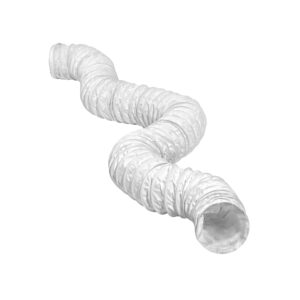
Vinyl ducts are flexible, plastic (PVC) hoses used for general ventilation and exhaust in residential applications, such as bathroom fans or fresh air intakes. They are made of vinyl or PVC, often with a steel wire helix to prevent collapsing, but they are not safe for dryer venting due to the fire hazard if they become clogged with lint.
Key characteristics
- Material: Typically made from a single layer of vinyl (PVC) bonded together with an adhesive.
- Reinforcement: A steel wire helix is spiral-wound through the material to provide structural support and prevent the duct from collapsing.
- Flexibility: Highly flexible, making them easy to install in tight or awkward spaces.
- Compressibility: Can be compressed to a much smaller length for easier storage and transport.
- Maximum temperature: Some are rated for a maximum operating temperature of around 158∘F and are not intended for high-temperature applications like dryers.
Common uses
- Bathroom fan exhaust: Expelling moist air from bathrooms.
- General ventilation: Applications that require moving air and expelling humidity.
- Greenhouses, grow rooms, and grow tents: Moving air and eliminating moisture.
- Surface-mounted humidifier units: Connecting humidifiers to a ventilation system.
Important safety warning
- Do not use for dryer venting: Vinyl ducts are a fire hazard when used for dryers because lint can build up inside and overheat the plastic material, leading to fires. Many building codes prohibit their use for this purpose. Always use a UL-listed, fire-resistant dryer vent hose instead.