
We've got 4 products for you
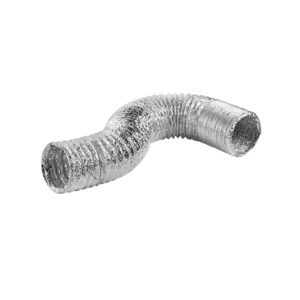
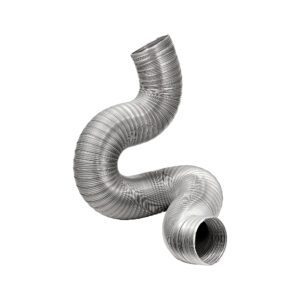
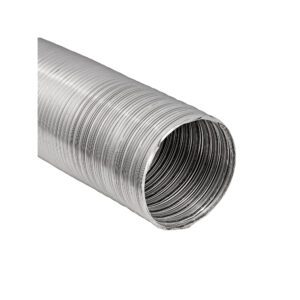
UL 2158A clothes dryer transition ducts are short, flexible pipes that connect a dryer’s exhaust port to the main rigid ductwork in the wall. They are designed to handle the tight space and angles between the back of the dryer and the wall vent, but they must be made of specific, fire-resistant materials and be no longer than 8 feet to avoid trapping lint and causing a fire hazard.
Key characteristics and requirements
- Material: Must be a single, heavy-duty, fire-resistant material, ideally a UL-listed metal-based flexible duct (such as aluminum or foil over a wire helix). Avoid plastic or flimsy foil ducts that can easily crush, rip, and trap lint.
- Length: Should be no longer than 8 feet and should not be stretched, flattened, or kinked, as this restricts airflow and is a fire risk.
- Placement: The transition duct cannot be concealed within walls, floors, or ceilings. It must remain visible in the laundry room and have a single, unbroken length.
- Purpose: Allows for flexibility in dryer placement by connecting the dryer to the main, rigid ductwork, which is often made of metal and runs through the home’s structure.
- Safety: The transition duct is a critical component for fire safety and dryer efficiency. Using an improper or damaged transition duct can be a significant fire hazard due to lint buildup.
- Installation: The duct should be installed with minimal slack and without crushing, as kinks and sharp bends can easily restrict airflow